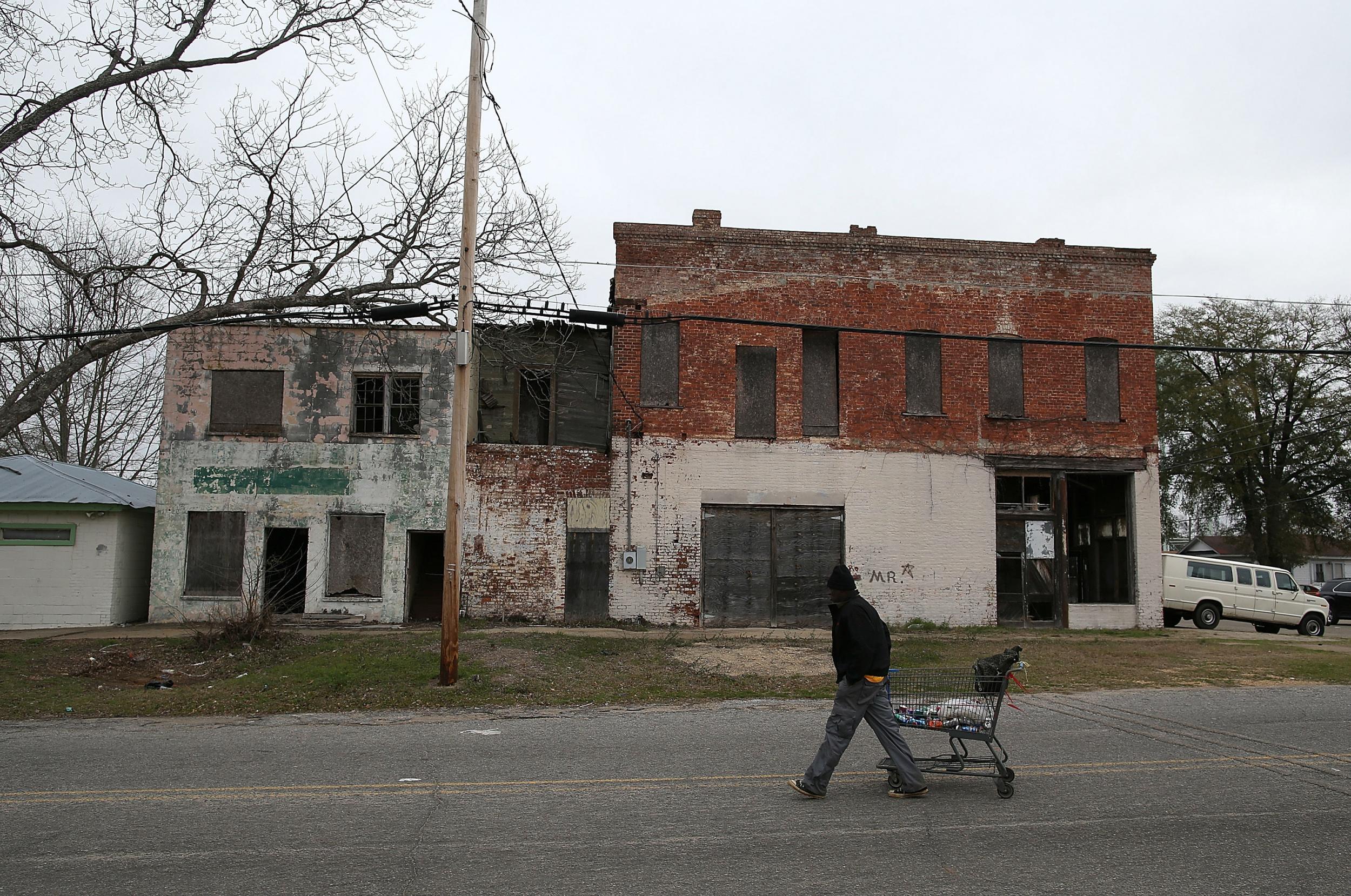
Provided by Getty Images
A food desert is an area where communities have limited access to affordable and nutritional food. Factors vary for these circumstances, but it mostly stems having limited income, living far away from grocery stores, and a lack of knowledge of nutritional food due to a lack of education. The US Department of Agriculture (USDA) defines a food desert as an area, "that has either a poverty rate greater than or equal to 20% or a median family income not exceeding 80% of the median family income in urban areas, or 80% of the statewide median family income in nonurban areas." According to USDA criteria, Food deserts in urban areas typically have at least 500 people who live more than 1 mile away from the nearest grocery store. In rural areas, food deserts have at least 500 people who live more than 10 miles away from the nearest grocery store.
Communities who live in food deserts do not always have convenient access to knowledge of nutrition and affordable healthy food options, and therefore are more prone to eating at low-cost fast food as their main source of food. These conditions increase the likelihood of type II diabetes, cardiovascular disease, and others in these communities. In fact, Alabama is one of the top states with the highest adult diabetes rate in the US, and research has shown that food deserts are one of the leading factors in this. There have also been links between nutritional food insecurity and the increase of gun violence, as an article in St. Louis, Missouri found in 2020 that out of the 271 homicides that occurred in the city, 70% occured in areas designated as food deserts. Experts suggest that the main reason for this outcome was the lack of a nutritional diet as well as hunger that is needed to face stressful situations that is associated with poverty.
Close to 2 million Alabamian residents live in a food desert, with about 150,000 living in Birmingham. That's close to 1/2 of Alabama's 4 million population!
There are many factors that influenced the development of food deserts, but prevalent factors include the effects of systematic racism in the US that allowed widespread poverty into racial lines and local crime rates that deter businesses and organizations from operating efficiently.
No, not necessarily. While communities benefit from new openings of nearby affordable grocery stores, diets do not automatically improve dramatically, despite claims. These efforts against food deserts also includes educating others on nutrition and healthy foods that helps reduce the dietary gap between the rich and the poor. A two-pronged approach to this issue requires both the opening of new grocery stores, community farms, etc that provide affordable and healthy foods and educating others about the merits of a healthy diet on a community-wide scale.
Many solutions are mostly oriented over policy-making by legislators. Increasing federal and state funding to food programs and mass media on healthy food choices are the most important to pursue. In fact, Governor Kay Ivey has made some progress in these efforts . However, you as an individual or group can do a lot in combating food deserts. Many efforts include but are not limited to,
More information is provided in "AFDP MAP".
Unfortunately, COVID-19 has only worsened the food insecurity
crisis in the United States,
creating more food deserts. Dramatic increase in unemployment, financial insecurity, and disrupted food chains has doubled food insecurity in US households. Even worse,
POC communities are most impacted by COVID-19, as the CDC has recorded
4.7 times more COVID infections in POC communities than white communitites. Often times, POC communites have high rates of diabetes, weak immune systems, hypertension, heart disease, and
mental illness. Among other factors, these diseases are created or impacted by low nutritional food and high food insecurity. Without a consistent supply of
nutritional foods into these communities, POCs and other impacted people are compromised by COVID-19, which often bolster other health issues. It's the reason why
Hispanics, Blacks, and Natives experience higher rates of hospitalization and death than White and Asian communities from COVID-19.